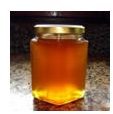
Have you ever wondered why you can loosen the metal lid of a jar by applying hot water? The answer involves a special thermodynamic property of solids called thermal expansion.
The Graduate School Dilemma
When I was in graduate school, I had an office in the basement that I shared with other students. Ingress to the office could be accomplished via the main entrance, but this entailed going up the main steps and then going down another flights of stairs to reach the basement. Sometimes, I would walk around the building to the other side, where going down a single flight of steps led to a metal door that provided direct entrance to the basement. This door had a quirk however - whenever the weather was warm enough, it became very difficult or impossible to open with our keys. If we did not have keys to the main door, could not get anyone to respond to our pounding, or could not find a security guard, we were locked out of the building. Being physics grad students, we knew we were victims of a simple physical phenomena called thermal expansion.
The Phenomenon of Thermal Expansion
In thermal expansion, atoms move slightly further apart than usual as the temperature rises. This effect is not limited to metals or even solids, and not every substance responds the same way to a temperature increase. A nice trick I used to do when I was growing up, and could not find one of my brothers to help me, was to run hot water over the metal lid of a glass jar that I was unable to open.
The metal would expand more rapidly than the glass, making the lid easy to twist and pop off. I no longer use this trick - I discovered it was more efficient to use a heavy dull metal knife and tap around the lid to get it to loosen - but it was quite handy for a while.
Photo: Gabrielhoy
The Mathematics of Thermal Expansion
Thermal expansion applies to the linear dimension of the substance involved. The formula to find out how the linear dimension changes with temperature is:
ΔL = L0αΔT
where L0 is the original length, ΔT is the temperature change, and α is the average coefficient of linear expansion. α is average because it can vary with temperature, but it is approximately constant for a solid, and is measured in units per temperature degree.
If we have a solid where all of the linear dimensions expand with temperature, then we would naturally expect the area and also the volume to change, as well. For the change in area A, we have:
ΔA = A02αΔT
where A0 is the original area, ΔT is the temperature change, and α is the coefficient of linear expansion as before.
A Special Case of Thermal Expansion
Volume expansion is treated as a special case, and it is applicable for both solids and liquids. The formula for volume expansion is:
ΔV = V0 βΔT
where ΔT is the temperature change, V0 is the original volume, and β is the coefficient of volume expansion. β is related to linear expansion α by the following:
β = 3α
The Mystery Solved
The jar trick works because at room temperature, the coefficient of expansion of ordinary glass is only 9x10⁻⁶/Co, while for a metal such as aluminum, the coefficient of expansion is 25x10-6/Co. The metal thus expands at a speed that is more than twice the rate of the glass. Mercury thermometers also operate on the principal of thermal expansion - the coefficient of expansion for mercury is 180x10-6/Co.
Mechanical engineers have to be especially wary of the effects of thermal expansion when they are planning projects. The consequences have been greater than merely having physics grad students locked out of the building on weekends or holidays.