This article looks at impacts and laws surrounding death on the high seas. Death provides many challenges, but when death occurs at sea, the challenges are magnified, requiring an understanding of the laws and policies that need to be followed.
The DOHSA Act
The Death on the High Seas Act or DOHSA, was passed initially in 1920 in response to a number of deaths at sea. The Act was passed in order to enable the families of people killed at sea – particularly those who were killed negligently. The initial intention was to make it easier for widows of seamen to claim damages for future earnings when their husbands died in International waters, however since 1920 the Act has been amended and although its initial principles remain intact, there are now provisions to allow claims for further damages – damages relating to the emotional suffering of the family.
Situations Covered under DOHSA
The Death on the High Seas Act covers only situations where an actual death occurs while on the water. There are other laws to cover the situation where an individual injured at sea dies later from their injuries, although this is subject to two exceptions – a claim can be brought if a personal injury claim is pending at the time of the death (in which case the injury claim is simply increased to a Death on the High Seas case), or if a lawsuit is in progress at the time.
How to Make a Claim under the Death at High Seas Act
For anyone to claim under the DOHSA, the maritime fatality of their family member must be related to negligence or recklessness on behalf of the owner or crew of the vessel on which they were killed. The Act is not limited to deaths on seaborne vessels, either. Aeroplane accidents that happen on or over International waters have been the focus of some claims under the Act, which has led to a number of test cases in regard to where the limit for these claims should be.
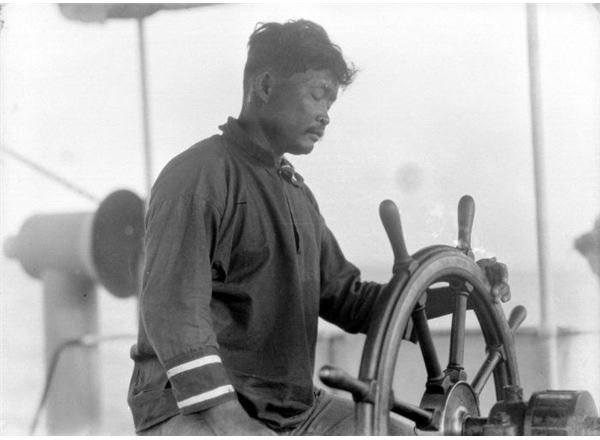
Image: Tropenmuseum, Amsterdam via Wikipedia Creative Commons
Statute of Limitation
There is a three-year statute of limitations on suits under the DOHSA, starting on the date of death in almost all cases, although if the claim is brought because of death following from an injury sustained at sea the statute begins at the time of the injury. In any cases where an individual is injured or killed at sea, one should always seek the advice of a practising maritime attorney in order that nothing is done – or left undone - that may cause the loss of rights under the DOHSA.
Limits of Damages Payable
The damages available to claimants under the Act are not limited to loss of potential earnings, and neither are they limited to earning potential. When a case is brought pertaining to such losses, if such a claim is successful the damages are calculated based on a lot of calculation and extensive testimony. This is why it is vital to make sure your legal representation is as good as it can possibly be whichever party you are in the claim. The amounts in question can vary hugely depending on what level of liability and loss you can prove. In this light, it is easy to see why an act was required to determine what exactly is covered by the definition of “liability” for death on the High Seas.