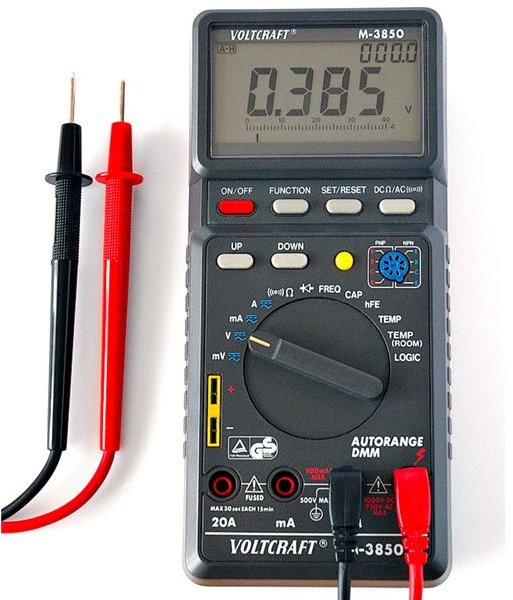
A tool that is necessary for all robot builders is the multimeter. However, there is sometimes an uncertainty as to what features a multimeter must have for building robots. Although most multimeters have the required features, one should still make sure before beginning a robot building project.
Introduction
Among the many tools that a robot builder has by their side, the digital multimeter is a crucial measurement tool that every robot builder is equipped with. With a multimeter, you can:
- determine what kind of part you’re dealing with
- determine the electrical denomination of a part
- determine whether too much or too little power is being used
- determine whether a part is damaged or not
- read chips and sensors to help with the designing and debugging processes.
Although some digital multimeters are much more expensive than others, they all have similar features. Basically, multimeter features can be divided into three categories: required, recommended, and optional. In this article, I will be discussing the required features for a multimeter. The following features are those that a multimeter must have in order to be used for robot building:
Images
Digital
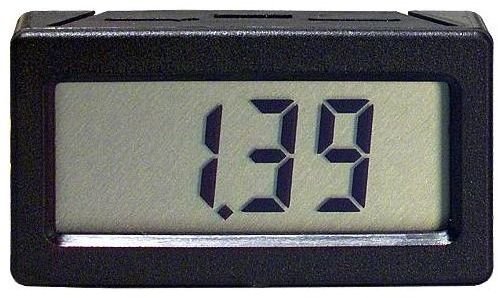
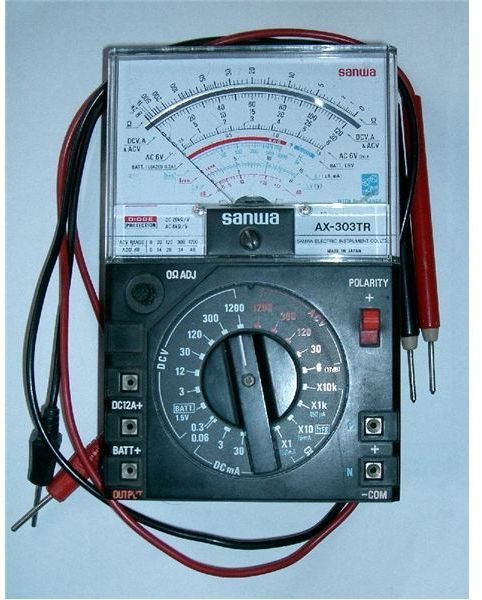
Although outdated, some multimeters have a needle display. These analog multimeters are not always easy to read due to the swinging nature of the needle. However, digital multimeters display values on an LCD (liquid-crystal display) such as the display found on calculators. Digital meters are precise and easy to read. Therefore, digital multimeters must be used for accurate readings.
Images
DC Voltage
DC voltage is an indication as to how much force the electricity has, and is measured in volts. For robotic purposes, only a range of 0.1 V to 30 V is required. All multimeters meet this basic requirement.
DC Current
DC current is an indication as to how many electrons are passing a certain point every second, and is measured in amps. For robotic purposes, only a range of 0.0001 A to 2 A is required. All multimeters typically meet this requirement.
Resistance
Resistance is an indication as to how much the flow of electricity is being opposed. A range of 1 Ω to 2,000,000 Ω is all that is needed for robotic purposes. Most multimeters meet this requirement.
Probes
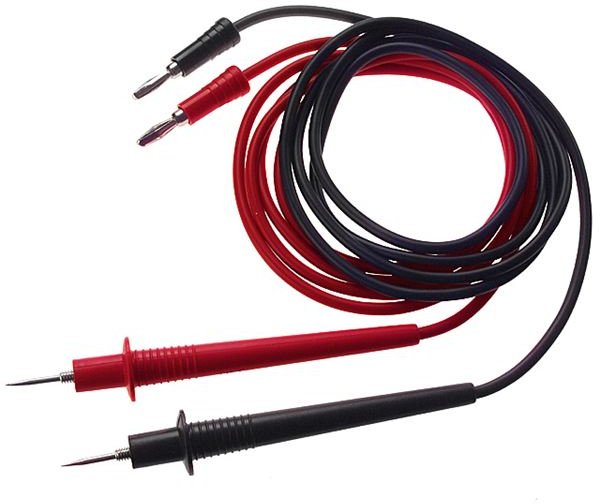
Although most multimeters are sold with test probes, you must make sure that you have a set of these cables in order to connect them to your robot parts for testing.
Images
Fuse Protection
In order to protect the multimeter from damage if an excess amount of voltage or current passes through the test probes, all multimeters must have fuse protection. To determine whether your multimeter has fuse protection, look for UL (Underwriters Laboratory) or CE (Conformité Européenne) markings. However, although a multimeter might have fuse protection, precautions must still be taken since a multimeter is still vulnerable to damage through its capacitor, transistor, and data ports.
Images


Images Courtesy
- https://www.thomasnet.com/articles/image/digital-multimeter.jpg
- https://i47.tinypic.com/34djsyg.jpg
- https://www.thomasnet.com/articles/image/analog-multimeter.jpg
- https://media.digikey.com/photos/Mueller%20Photos/110011.jpg
- https://www.irdial.com/ul-certified.jpg
- https://www.avermedia.co.th/home/_admin/newservice/T_NEW0000069.jpg