In this article we discuss the pirate ship designs of the 1700s and 1800s that were contributory to the golden age of piracy. The pirates had no opportunity to design ships and they were all captured. These ships were soon modified for speed, firing power, and hull was reinforced in critical places.
History of Pirate Ships
The pirate ship designs during the golden age of piracy were such that it allowed the pirates fast approach and boarding capabilities. The pirate crafts used were shallow crafts having less draught and adequate gun power for intimidating the enemy. The various types of ships that were used by pirates during the golden age of piracy are as follows:
- Frigate: The frigates were basically Admiralty ships used as Man-of-Wars, and no pirate had the guts to command them except Blackbeard. The frigates had three masts, a quarter deck, a raised fore castle, and about 24 cannons. They had a displacement of about 360 tons and could carry about 190 men. The frigate Queen Anne’s Revenge was commanded by Edward Teach also known as Blackbeard.
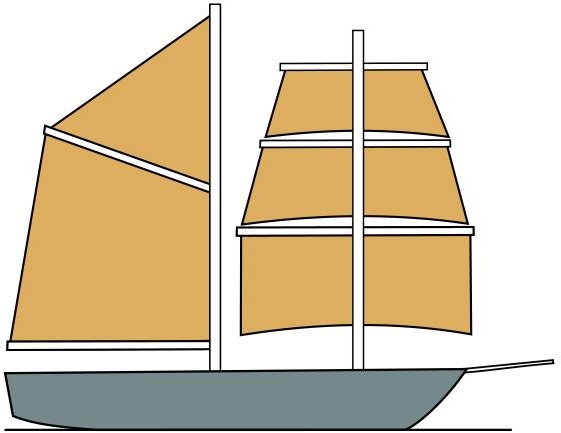
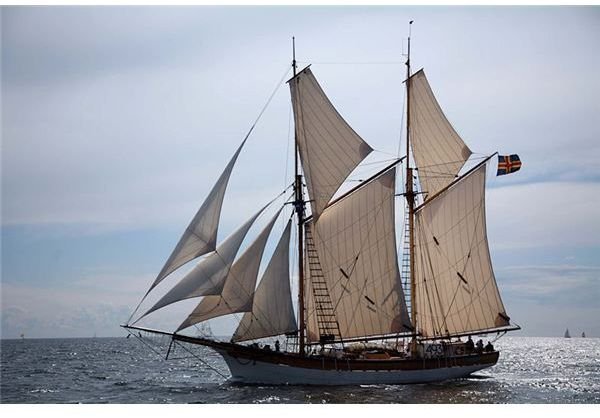
- Brigantine: The brigantines were always on the lookout of the pirates who liked to capture and command them. They had two masts, four sails, and a displacement of about 150 tons. They had about 10 cannons and could house about 100 pirates.
- Sloops: They were ships with a single mast and had about 10 guns. These were about 100 tons in displacement and could carry around 75 pirates. They were ships with shallow draught that could escape over muddy banks from their enemies.
- Schooner: The schooners were two masted and narrow beam ships. They also had a displacement of about 100 tons and could also carry around 75 pirates.
Brigantine & Schooner
Design and Modification of Pirate Ships
The pirate ships were not designed by the pirates, but were stolen and some modifications were done by the pirate crew. In contrast to these, the government-approved pirates known as the privateers had the liberty to design their ships for performance and safety. The pirate ships were not custom-built, but were modified for cannon power, fast speed, and quick boarding. Sometimes superficial superstructure was cut away to make the ship light.
When a pirate captain captured a ship and found it suitable to make his flagship, he would have some modifications done to suit pirate tasks. Generally ships of that time served as man-of -war as well as merchantmen as the conditions then demanded. It meant that they were a compromise between the two types of ships.
The pirates had no use for extra storage spaces and extra superstructure, so they would remove it. As pirates would chase the merchant ships and run away from the government ships or man-of-wars, they had to be light. So the pirates used to remove all extra weights extra food, extra water, etc., as they did not go for long sailing, but preferred to be hide near the coast waiting for their prey.
Once a ship was taken over, it was strengthened on the hull, the cannon power was increased, the masts put up larger sails, the ship was beached and the hull smoothened, and the extra cargo removed. They often would remove the forecastle and the quarter deck to make way for a larger sail.
The advantages of removing the various partitions inside the ship was that the ship became less top heavy and the stability of the ship improved. This also caused the ships to have less draught and allowed them to escape where the water was shallow. The other advantage was that approach inside the ship to and fro was made easier in the times of battle, and arms and provisions could be more easily transferred from one end to the other.