The theory of thermal expansion is important to industrial design and engineering. Here we provide an introduction to how it works and give examples of how it is applied.
Thermal expansion is the tendency of a body to experience transformation in volume when temperature is changed.
When a material is heated, molecular activity increases and the energy stored in the bonds between atoms is changed. With the increase in stored energy, the length of molecular bonds also increases. Consequently, solids expand when heated and contract when cooled. The ratio of expansion and change in temperature is known as the coefficient of thermal expansion of the material. Materials generally have a constant coefficient of thermal expansion that is not changed considerably during use of these materials. However, for an accurate analysis, measurement of thermal expansion at all the operational range of temperatures and pressures would be essential. With an increase in energy of bond thermal expansion usually decreases, due to which the hardness of solids is affected.
Negative Thermal Expansion
Some materials contract when heated in a specified range of temperatures and this is called negative thermal expansion. As the water is cooled to 4 degrees C, its coefficient of thermal expansion drops to zero, and it becomes negative when temperature is further reduced.
Engineering Applications Of Thermal Expansion
Shrink Fit In Manufacture of Mechanical Parts
Thermal expansion is taken into consideration in the manufacture of mechan
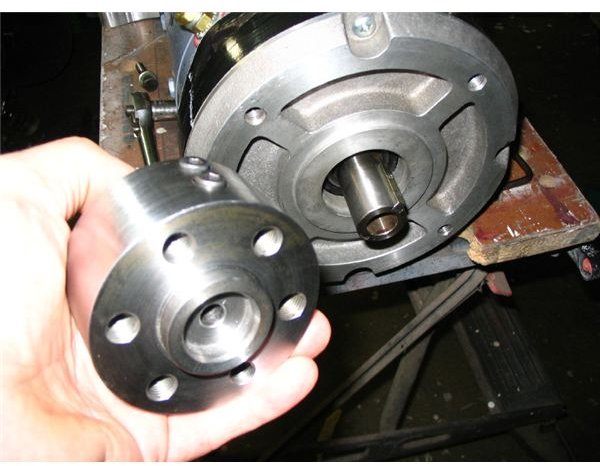
ical components that fit over one another. A shrink fit is obtained for fitting a bushing over a shaft by designing the bushing diameter slightly less than the shaft diameter. The bushing is heated slightly till it fits on the shaft, and then it is cooled. A shrink fit is generally used in industries by pre-heating metal parts to allow expansion and consequently facilitate insertion and removal of another part.
Railway Tracks And Steel Bridges
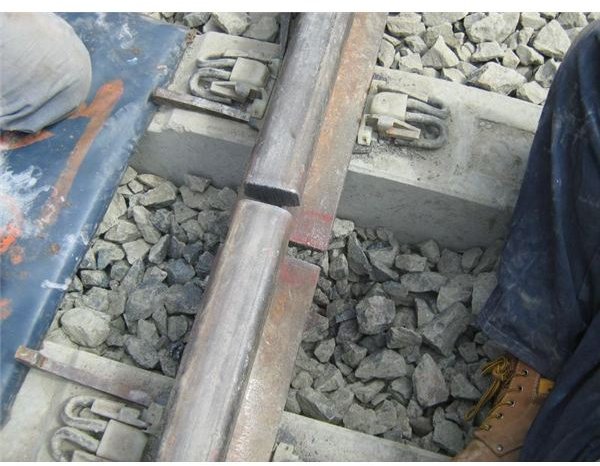
Railway tracks are another example where the concept of thermal expansion is utilized. Space is left between railway tracks as an allowance for their expansion when temperature increases, otherwise the rails may buckle. Similarly, long steel bridges are designed to include expansion joints to allow for their expansion, by fixing one end and resting the other end on rollers.
Mercury And Bi-metal Strip Thermometers
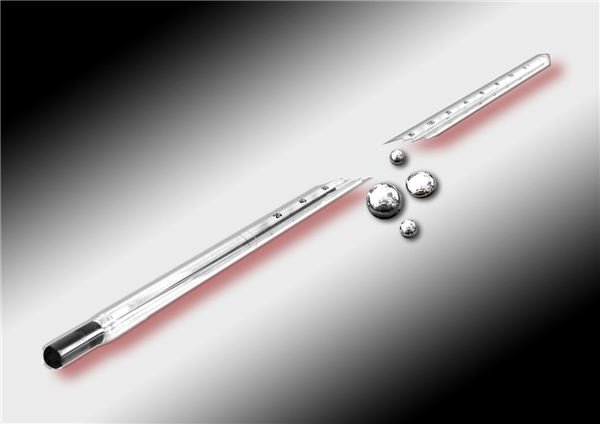
Thermal expansion is also applied in mercury thermometers that contain a liquid, the volume of which changes as the temperature varies. Liquids occupy less space when cold, but additional space is required when temperature is increased. As the liquid expands, its volume changes and it is forced to flow along the tube that is calibrated to indicate the temperature.
Bi-metal strips in a mechanical thermometer pos
sess different coefficients of thermal expansion, due to which their expansion with a rise in temperature is different. The strips bend since the expansion or contraction of the materials used is not similar. This concept is utilized in measurement of temperature.
Automobile Engine Coolant
The concept of thermal expansion is also used in the systems of engine coolant in automobiles. If coolant is filled in the radiator with engine in a cold condition, it will spill over with the heating of engine during operation. Thus an overflow tank is fitted that accumulates such coolant during thermal expansion, and as the engine is cooled it returns to the radiator.