Computers may be taking orders from human beings but they can govern very sophisticated machines and machine tools to carry out complex manufacturing operations. Learn about the use of PCs in CNC machines
Introduction
The line of demarcation between the machines & computers is fast diminishing in the current era with increasing use of computer related equipment in the manufacturing and other sectors. In this context it is interesting to study the role of programmable controllers in CNC machines.
The Programmable Controller
Computer control machines through giving them the requisite signals which were initially fed from the processor to the machine through hard wires. This meant that a complex set up required a large network of wires running between the computer hardware and the machine which obviously has its drawbacks since wires could be broken plus there is difficulty in managing such a large bunch of wires in the manufacturing environment which is often full of heat, dust and so on.
This problem was eliminated through the use of the programmable controller which is nothing but a hardened microprocessor which can be programmed in relay ladder logic. Of course in the modern day equipment relays are seldom used but only the name remains to signify that relays were used in implementing the logic.
The various components of the programmable logic are the central processing unit, random access memory, module for command input and output unit. So basically they are all components which are common to a computer. This PC (programmable logic and not personal computer) gives the facility of changing the program for machining fed into the logic without having to undergo the laborious process of mechanically changing relays and wires which used to be there in the older days.
The input units mentioned above could consist of several things such as limit switches, push buttons and so forth. These devices in turn generate signals which are fed to various components like lights, motors and solenoid valves which is used to control the exact type of manufacturing machine which is under consideration.
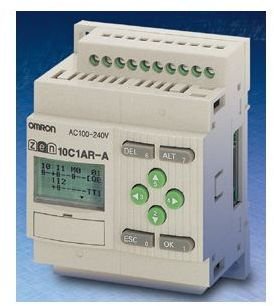
The picture below shows a typical programmable logic controller and you can see the various components mentioned above.
Later on the PCs were also modified to use and perform arithmetic functions such as those providing control loops which monitor variables and can be used for analog as well as digital applications.
The only drawback of using programmable controllers is that they cannot be used in places which require fast production. A typical programmable controller would require nearly twenty milliseconds of time to respond to an input and change the output as a result of this input. This may seem very fast in human terms but quite slow if considered from the machine viewpoint and considering the fact that an automated operation would have went on for 20 ms more than intended, which in turn could result in quality of output depending on the exact situation where the PC is located and used.