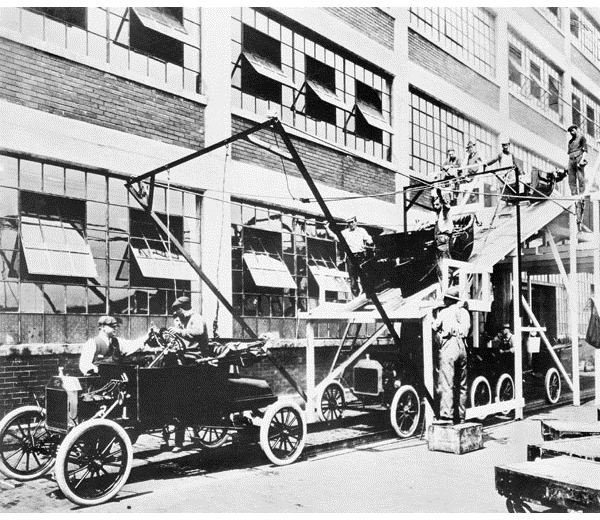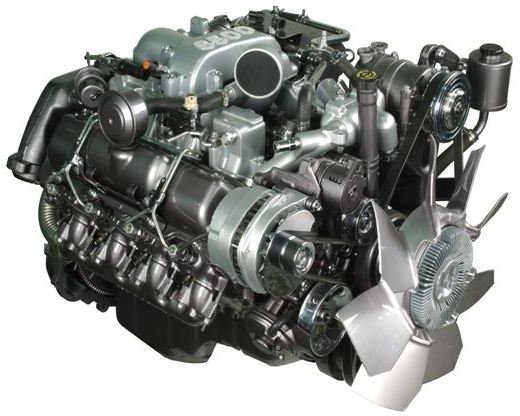
Can you imagine a world without the Diesel Engine? The trains, locomotives, the marine generators, power generators, million of trucks and other vehicles on the road – the entire global economy would come to a screeching halt, if it weren’t for this work horse engine. Read the Diesel Story here.
One of the most important developments came about when Rudolf Diesel (1858 - 1913), a German Engineer born in Paris conceived the Diesel Engine. The term “Diesel Engine” is used through-out the world to denote any compression ignition oil engines, two-stroke or four-stroke, with airless, fuel injection.
He first proposed compression of air alone within the combustion chamber until a sufficiently high temperature was attained to ignite the fuel which was to be injected at the end of the compression cycle. In one these early experiments, he tried to inject coast dust at the end of the compression cycle and saw success only to the extent that the explosions from one of these experiments almost cost him his life. Only after he turned to liquid fuel did he see any measure of success after a back breaking 4 years of hard work.
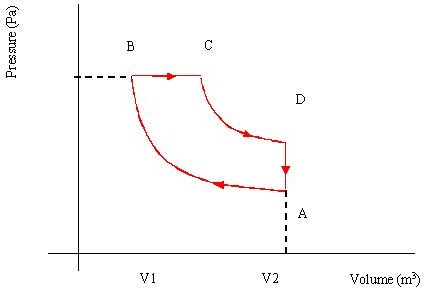
The invention of Diesel engine was financed by M.A.N of Ausburg, Germany. The early engines employed a compression pressure of about 400 psi, liquid fuel and high pressure injection. An indicator diagram is as shown below.
Rudolf Diesel, as you can well, imagine, wanted his engine to replace the seemingly acceptable Steam Engine and wanted his engines to be the primary source for power in the Industry. The early diesel engines in the late 19 and 20 century were much like the industrial steam engines – complete with long-bore cylinders, externally operated valve gears and an open crankshaft connected to a large flywheel. Most of the larger sized engines had horizontal cylinders while the smaller ones had vertical cylinders. These engines could have more than one cylinder if desired and they were usually started by allowing compressed air into the cylinders to turn the engine, although smaller engines could be started by hand.
The early engines could attain up to 26.2 percent of thermal efficiency. In the year 1913, he had mysteriously disappeared from a ship enroute England from France. It is believed that he committed suicide to extricate himself from the hardships he was facing due his financial problems and heavy work loads to popularize his engines.