There are many options available for connecting mechanical parts in a system or mechanism. Sometimes, the choice between various joint types is obvious – however, there are designs that require a serious consideration of the possible joints – especially if those are to be dismounted regularly.
introduction
As it was presented in the first article of mechanical joints overview, there are two basic types of joints – temporary joints and permanent joints. The former is a type of joint that cannot be undone once made – and this is a major drawback, despite the strength and reliability. Examples of such joints are welding and riveted joint.
Temporary Joints
The temporary joint can be also as strong – but it is a type which can be modified according to the alteration required. The parts can be dismantled and assembled with ease thereby making it easy to transport. In addition, temporary joints are, in general, fairly easy to facilitate and do not involve extreme technical know-how. The strength of the joint could be varied by locating the joint in the optimum place and by choosing the optimum method to join the same.
Bolted Joint
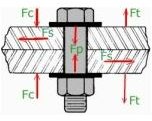
Bolted joints are the primary example of temporary joints. As the name suggests, bolts and nuts are used here to facilitate joining of two parts. The first component of the bolted joint is, of course the screw. It can be a cap screw with a hexagonal head (considered to withstand the most severe loads) or rounded/socket head type screw of various standard and size. In this joint, the bolt is inserted into a pre drilled hole (not threaded!) that is beiger that the bolt’s threaded cylinder outer diameter. From the other side, the nut (with a matching internal thread) is run to tighten the joint. The pressure applied by the nut creates a very high friction between the 2 joint parts, practically locking relative movement. The nut can be removed when required to dismantle the assembly so that the joints can be undone. Spanners of various standard sizes are available to tighten or loosen the bolt by application of torsional force. One has to remember allowing access and also clearance for using this tool when designing a bolted joint subject to severe space-limitations. Many times a definition of torque is required to avoid damaging delicate equipment yet ensuring enough pressure applied.
Screw Joint
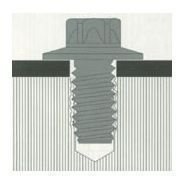
Screwed joint is sometimes considered a separate type – but it is actually a variation of bolted joint. The difference is that a screw is used rather than bolt – thus requiring an internal thread in one of the to-be-joined parts. This can save space, however, continuous reuse of the thread would probably damage the coils, making the whole part unsuitable. Thus inserts and heli-coils should be applied, especially for softer types of metals (such as aluminum) and smaller threads, making it possible to replace the damaged insert/helicoil instead of throwing away the whole part.
Bolted Joint Design
Bolt joints are good for holding tension and compression stress, but are less suitable for shear loads. The failure will occur most time at the first or second coil, as it bears the major part of the load. Loosening of nuts/screws may sometimes lead to joint failures as well and should be avoided by applying locking adhesives or spring washers.
Summary and More
After reviewing the permanent and temporary joints, it has to be noted that there are other possibilities – for instance, machining the part as one solid piece. Read about the advantages and problems of this approach in the next article.