In automobile, motorcycles and aircraft, power increase is accomplished by the use of a turbocharger. This becomes possible by increasing the pressure of air coming in the engine. The working principles and design will be covered and discussed by the article as well as details of its function.
The Working Principles of a Turbocharger
In an internal combustion engine where there is a need to increase the power, a turbocharger comes in application. In order to accomplish this, the turbocharger increases the mass flow rate of air entering the engine by the turbine action driven by it’s exhaust. It is widely applied in aircrafts, automobiles and motorcycles.
Turbocharger design and function
The turbocharger is like a miniature gas turbine, it is a small radial fan driven by the forward motion of the engine exhaust. Comprising the turbocharger are the turbine and the compressor sharing a single shaft. When the exhaust gasses enter, the fan rotates which drives a compressor. Air is then squeezed by the compressor before being delivered to the engine air intake manifold. Because air is compressed, the engine could then take in greater amounts of air to the cylinders. Usually the engine takes in air through a vacuum created by the downward stroke of the cylinder. The normal air pressure is at 14.7 psi and there is a limit to the pressure difference across the intake valves resulting in a limited air mass flow rate. In order to increase the intake, pressure must then be increased. In this way additional oxygen to the engine makes it possible to burn more fuel which increases the power of the engine. Increase air pressure is possible with the turbocharger application.
Turbochargers, although applies the same as superchargers except for small variations. Superchargers, particularly Centrifugal superchargers were spun by the rotation of the engine’s crankshaft. This made turbochargers more efficient in terms of recycling energy loss through the exhaust.
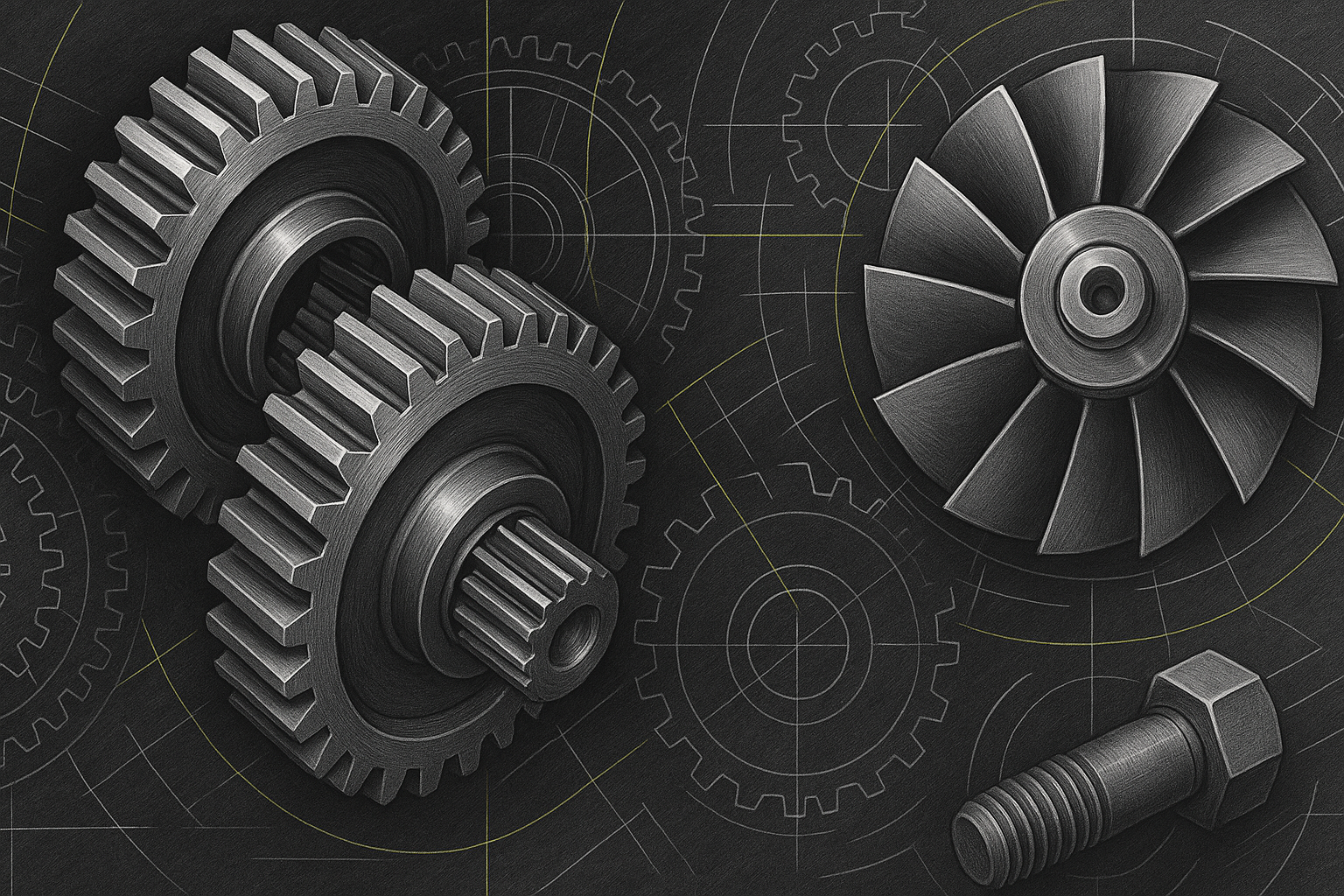
Although the turbocharger consists of a turbine and a compressor, several working components actually comprise it. The turbine and the impeller are contained in their own housing. The housings fitted around the compressor impeller and turbine directs the flow of gasses through the wheels. The motion of the gasses causes the impeller to spin. In this case the size of the impeller wheel dictates the amount of gas it could take. The single shaft connecting the turbine to the compressor is housed in the center hub rotating assembly (CHRA). The CHRA also contains bearing to minimized friction, lubrication and in some cases the turbocharger cooling system; water cooled models have entry and exit points for the engine coolants to cycle. Devices such as waste gates then control the spin of the turbine.