Ever hear a banging noise in your house whenever you run the water? Find out how it happens and other places it can occur. Also let us see what is cavitation?
What is Cavitation?
In the most basic sense, cavitation occurs when the pressure of a fluid becomes the same as its vapor pressure. When this happens a bubble of vaporized fluid forms.The formation of the vapor bubble is like boiling, but without adding heat. The vapor bubble is then quickly compressed by the pressure of the surrounding fluid. Because this process happens very quickly, it creates a lot of localized energy. Once the bubble is compressed enough it releases this energy in the form of heat, sound, and even light.
Cavitation in Nature
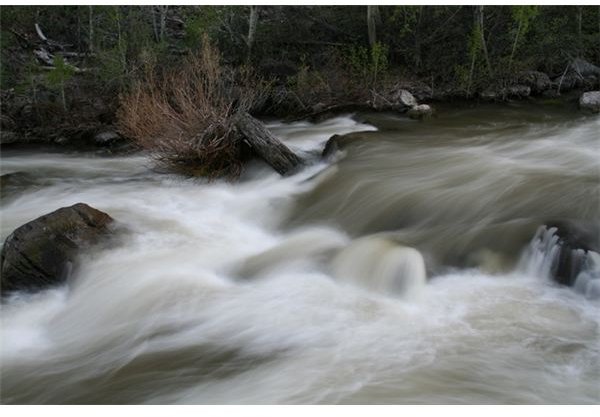
It may not seem like such a fantastic event could occur very often, but it is something that occurs all around us. Cavitation can be observed in fast moving streams, usually at waterfalls or other places where a drastic change in elevation occurs. This is a case where an obstruction, such as a rock, creates a low pressure area that, if the water is moving fast enough, is at the pressure required to vaporize water.
Cavitation at Home
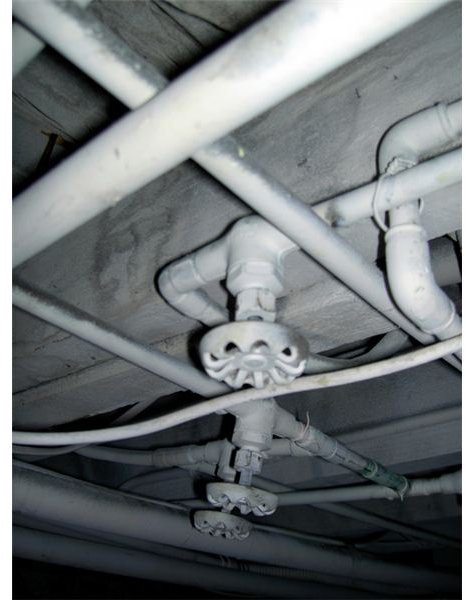
Something like this can even happen at home. An old house tends to have mineral deposits in the water pipes which can create obstructions that get in the way of fluid flow. Just like with the fast moving stream, the obstructions in the pipe can create low pressure areas. This makes a noise inside the pipe that sounds like someone is hitting it with a hammer, sometimes referred to as a “water hammer”. So, if you hear a hammering noise whenever you turn on your water, you probably have a cavitation problem in your pipes and should have them looked at.
Other Forms of Cavitation
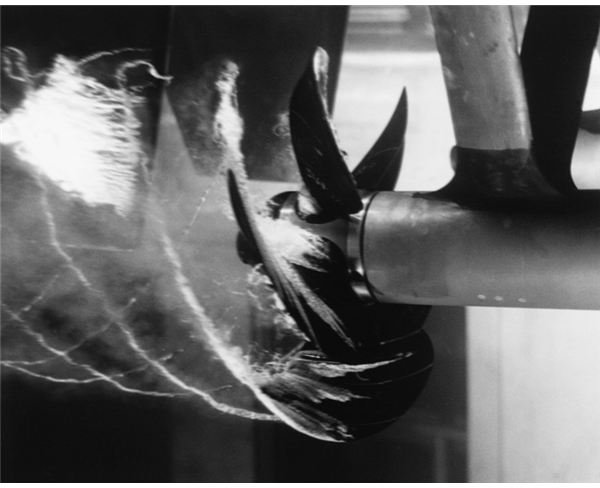
This is not the only way cavitation can occur. The fluid itself can be stationary and an object, such as a propeller, can be moving. Cavitation can also be induced with ultrasound waves. When cavitation is created using sound waves it is considered non-inertial cavitation. All other forms of cavitation are considered inertial.
What Now?
Now that you know what cavitation is, find out the effect it has on our lives, here .